


















































GLP-1 Weight Loss and Body Contouring in Boca Raton and Fort Lauderdale
According to the New England Journal of Medicine, clinical trials of semaglutide showed participants losing an average of nearly 15% of their body weight over 68 weeks. But for many patients in Boca Raton and Fort Lauderdale, the scale moving in the right direction is only part of the goal. Stubborn fat pockets, reduced muscle tone, and loose skin often remain even after significant progress.
At Sanctuary Medical Aesthetic Center, board-certified plastic surgeon Dr. Jason Pozner and his team combine semaglutide weight loss programs with non-invasive body contouring to help patients achieve results that look as good as they feel.
GLP-1 receptor agonists mimic glucagon-like peptide-1, a hormone the gut releases after eating, to reduce hunger, slow gastric emptying, and improve blood sugar regulation. When medically supervised, as at Sanctuary Medical, patients receive ongoing monitoring to minimize side effects and protect overall health.
One underappreciated consequence of rapid weight loss is the loss of lean muscle alongside fat. Research published in Obesity Reviews found that caloric restriction without resistance training can cause meaningful reductions in muscle tissue, leaving the body feeling softer or less defined even after significant weight loss. Targeted body contouring addresses each of these concerns directly.
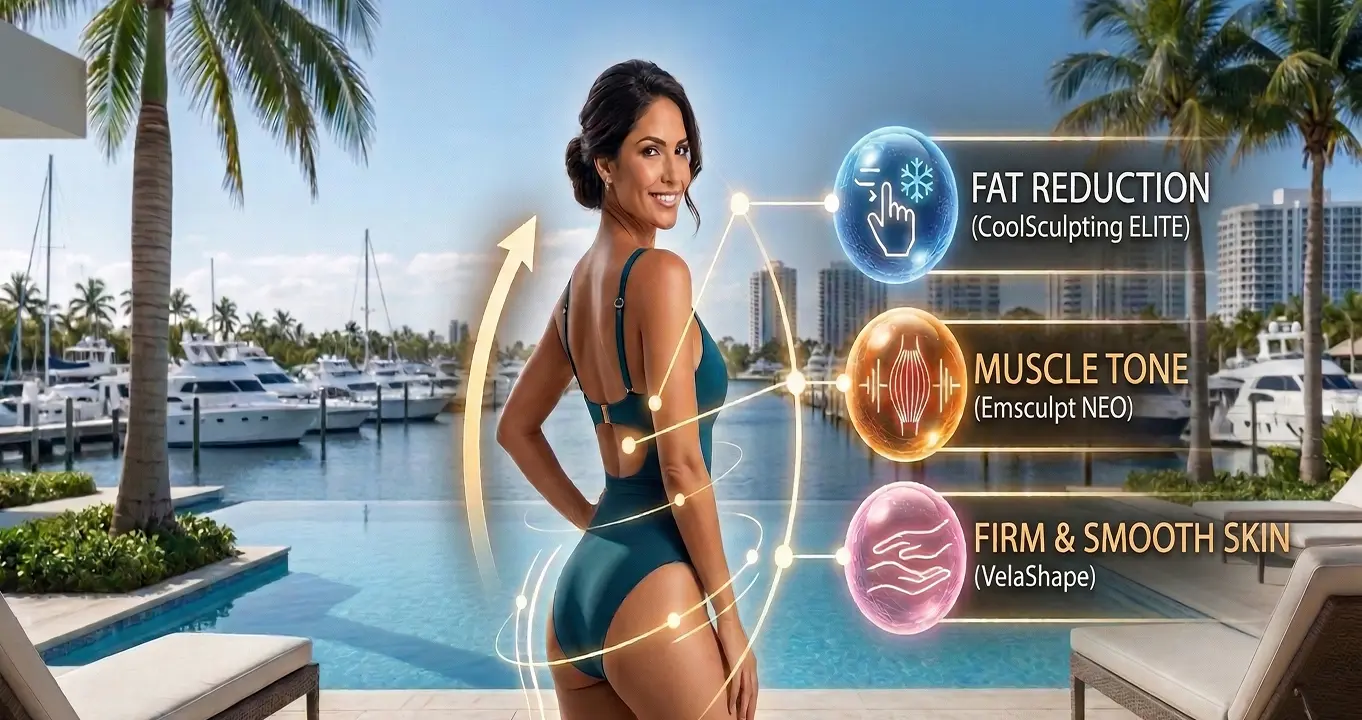
Yes. Non-invasive treatments like CoolSculpting ELITE, Emsculpt NEO, and VelaShape each target a different concern: fat cells, muscle tissue, and skin texture, and none interact with GLP-1 medications. Many patients begin body contouring mid-program once their weight has stabilized in a particular area. A consultation with the Sanctuary team helps determine the right timing based on where a patient is in their progress.
Even after losing 20, 30, or 40 pounds, the abdomen, flanks, inner thighs, upper arms, and under the chin often hold onto fat that GLP-1 medications alone cannot fully resolve. CoolSculpting ELITE uses cryolipolysis to freeze and permanently destroy those fat cells without surgery, anesthesia, or downtime. The body eliminates the damaged cells through the lymphatic system over several weeks. Visible results typically appear at 4 to 6 weeks, with full results at 2 to 3 months.
Because GLP-1 medications reduce caloric intake, muscle loss is a real concern during weight loss, even when the program is working well. Emsculpt NEO simultaneously delivers HIFEM energy to trigger supramaximal muscle contractions (the equivalent of roughly 24,000 crunches per 30-minute session) and RF energy to destroy fat cells in the same treatment area. Most patients complete four sessions over two weeks, with tone improvements visible within 2 to 4 weeks of the final session.
Cellulite forms when fibrous connective bands pull downward against fat lobules beneath the skin. Weight loss can make this more pronounced, and rapid loss can also leave skin looking uneven or crepey. VelaShape uses a combination of infrared light, bipolar radiofrequency, vacuum suction, and mechanical massage to disrupt those bands, stimulate collagen production, and improve lymphatic drainage. Most patients see meaningful improvement after 3 to 5 sessions with no downtime required.
Fat reduction, muscle tone, and skin quality are three separate physiological processes, and no single treatment addresses all three. Cryolipolysis removes fat but does not build muscle. Electromagnetic energy builds muscle but does not tighten skin. Combining treatments means each concern gets a targeted solution.
Research on body image consistently shows that patients who achieve results matching their mental picture of success report significantly greater satisfaction than those who lose weight but feel disconnected from their appearance. For GLP-1 patients, body contouring bridges the gap between where the scale stopped and where they actually want to be.
Results vary based on starting point, number of sessions, individual metabolism, and lifestyle habits maintained after treatment. General timelines for most patients:
All three treatments are FDA-cleared and non-invasive. Patients still actively losing weight should discuss treatment timing with their provider, as continued weight loss can affect contouring results.
Can you do CoolSculpting while on GLP-1 medications like semaglutide or Ozempic?
Yes. CoolSculpting ELITE uses a localized cooling process that does not interact with GLP-1 medications and is safe to begin once weight has stabilized in the target area.
Does Emsculpt NEO help with loose skin after weight loss?
Emsculpt NEO builds muscle and reduces fat, and increased muscle volume can improve skin appearance, but patients with significant loose skin will see better results by adding VelaShape or discussing other options during a consultation.
How long after weight loss should I start body contouring?
The general guidance is to wait until weight has been stable for at least 2 to 3 months in the areas you want treated, though Emsculpt NEO can be started earlier since muscle building benefits patients throughout the weight loss process.
Will I lose muscle during GLP-1 weight loss?
Muscle loss during caloric restriction is a documented concern, and it is one of the primary reasons Emsculpt NEO has become a popular complement to semaglutide programs.
How many sessions of each treatment will I need?
CoolSculpting ELITE typically requires 1 to 3 sessions per area, Emsculpt NEO is most effective in a series of 4, and VelaShape generally requires 3 to 5 sessions. Sanctuary’s team will outline a specific plan during your consultation.
Losing weight is a meaningful accomplishment. Body contouring is how patients finish what they started. Dr. Jason Pozner, board-certified plastic surgeon and co-founder of South Florida’s largest laser facility, leads a team that designs fully personalized treatment plans around each patient’s goals, timeline, and current progress.
Call (561) 247-2958 or book your consultation online to get started.


According to NASA research, experimentation in the 1990s gave scientists crucial insights into how different wavelengths penetrate the body and trigger cellular responses for wound healing and tissue regeneration. What started as space research has become a cornerstone of modern aesthetic medicine.
Red light therapy gets most of the attention when people discuss LED treatments. But blue, green and near-infrared wavelengths each work differently in the skin. They penetrate to varying depths and activate distinct biological pathways. Today’s professional systems can layer these wavelengths in specific patterns to treat everything from stubborn acne to surgical wounds.
Blue light at 415 nanometers works in the upper skin layers to kill acne bacteria. Here’s what happens: Propionibacterium acnes absorbs the blue light, which activates porphyrins inside the bacteria. These porphyrins create free radicals that punch holes in the bacterial membranes. Studies tracking patients through eight sessions found inflammatory lesions dropped 60% to 70%. The treatment also changes how the body produces cytokines, calming inflammation without antibiotic side effects.
Red light between 630 and 660 nanometers goes deeper, reaching the dermis where fibroblasts live. These cells respond by ramping up type I procollagen production. At the same time, the light dials down matrix metalloproteinase-1, an enzyme that chews up existing collagen. Peer-reviewed journals have documented what this means for skin: fewer fine lines, shallower wrinkles, better elasticity. The changes build slowly over about three months as fresh collagen develops.
Near-infrared light at 830 to 890 nanometers penetrates deepest. It pulls nitric oxide out of hemoglobin and mitochondrial complexes, opening up blood vessels. More blood means more nutrients and oxygen reaching damaged tissue. Research shows this speeds wound healing by encouraging new blood vessel formation and triggering growth factors. The extra circulation also knocks down inflammation while tissue repairs itself.
Green light around 520 nanometers looks promising for tackling dark spots. Early research suggests it can fade melasma and other pigmentation problems while supporting healthy blood vessels. Patients who stick with green light treatments and use good sun protection often notice their skin looks brighter.
One controlled trial put single-wavelength red light up against systems using multiple wavelengths. Both worked well, boosting collagen and making patients happy with results. Surprisingly, the multi-wavelength systems didn’t do better. The takeaway: when you dial in the right single wavelength for someone’s skin, it can work just as well as fancy combination treatments.
But other studies tell a different story. Researchers tested red light at 633 nanometers paired with near-infrared at 830 nanometers for aging skin. Nine treatments later, half the participants saw their photoaging scores improve by 25% to 50%. Even better, 81% said their crow’s feet looked noticeably better at the three-month mark.
What matters most isn’t just mixing wavelengths. It’s the details: how much energy (fluence), how long you apply it (irradiance duration), whether it pulses or stays steady. Professional equipment lets practitioners tweak all these variables based on what they see in your skin.
LED therapy does more than smooth wrinkles. Dermatologists use blue light to treat acne in patients who can’t handle oral antibiotics or harsh topical creams. The antibacterial effects work without the irritation or systemic problems prescription medications can cause.
Wound healing is another area where LED light proves useful. Red and blue wavelengths both help tissue repair in wounds that aren’t getting enough oxygen. They boost blood vessel growth in the deeper skin layers and muscles, which cuts down on dead tissue and speeds recovery. This makes LED valuable after surgery or for treating skin that’s struggling to heal.
Some doctors now build LED into their post-procedure routine. After ablative lasers, chemical peels or microneedling, LED can dial down inflammation and get healing moving faster. Since LED doesn’t create heat, it works well on sensitive, freshly treated skin.
Researchers are also testing LED on chronic inflammatory conditions like psoriasis, rosacea and dermatitis. Results vary depending on the condition and the person, but the anti-inflammatory effects give doctors another option for managing these stubborn problems.
| Feature | Professional Systems | At-Home Devices |
| Power Output | High energy density (up to 126 J/cm²) | Low power for safety (<5 J/cm²) |
| Wavelength Precision | Narrow, calibrated spectra | Broader, variable output |
| Treatment Area | Large, consistent coverage | Small, limited zones |
| Customization | Fully adjustable parameters | Fixed settings |
| Results Timeline | 3-4 sessions for visible changes | Months of daily use needed |
| Professional Guidance | Individualized protocols | No supervision |
Professional LED systems aren’t just more powerful than home devices. Medical-grade equipment hits exact wavelengths consistently across the entire treatment area. Early consumer LED devices scattered their light all over the spectrum, which limited what they could actually do. Modern professional systems zero in on narrow wavelengths that match what cells respond to best.
Getting the settings right takes expertise. Studies show effective doses range wildly, from 0.1 joules per square centimeter for some pulsed treatments all the way up to 126 joules per square centimeter for continuous red light. Practitioners adjust exposure time, how often you come in, and how many total sessions you need based on how your skin responds.
Home LED masks and handheld gadgets run at lower power to keep things safe when no one’s supervising. You might see subtle changes with daily use, but real therapeutic benefits usually need the stronger energy from professional treatments. A few sessions at the office typically beat months of using home devices.
Training matters too. Combining LED with other aesthetic treatments means understanding skin biology, when tissue heals, and how different treatments interact. A professional assessment figures out which wavelengths and settings will actually work for your specific concerns.
Sanctuary Medical Aesthetic Center keeps one of the most complete light and laser collections in the Southeast. Our board-certified dermatologists and plastic surgeons, working under Dr. Jason Pozner’s leadership, match deep knowledge of how light affects skin with equipment that can deliver real results.
We start your light-based skin rejuvenation with a detailed consultation. After examining your skin and talking through what bothers you most, we recommend specific treatments. Our facility stocks multiple wavelength options and energy-based technologies that work well together.
If you’re struggling with acne and inflammation, we build protocols targeting both active breakouts and the marks they leave behind. That might mean LED wavelengths alongside HydraFacial treatments and skincare products chosen for your skin type.
Ready to see what light therapy can do for your skin? Call our Boca Raton or Fort Lauderdale office at (561) 247-2958 or book online. We’ll map out a treatment plan that makes sense for your concerns and your schedule.
It depends what you’re treating. Acne usually needs eight to 12 sessions spread over four to six weeks. Anti-aging treatments might show early improvements after three or four visits, but the collagen-building process takes about 12 weeks to really show up. Your provider will watch how your skin responds and adjust the schedule accordingly.
No pain, no recovery time. LED doesn’t heat your skin, so most people just feel mild warmth during treatment. You can go straight back to whatever you were doing. Some people get a little redness that fades within a few hours.
Yes. Many doctors use LED after procedures like chemical peels, microneedling or laser treatments because it calms inflammation and speeds healing. Your provider can tell you which combinations make sense for what you’re trying to fix.
Professional systems pack more power and hit exact wavelengths consistently across your entire face or body. That means bigger changes in fewer sessions. Home devices stay at lower power levels for safety, so you’d need to use them daily for months to see subtle improvements.
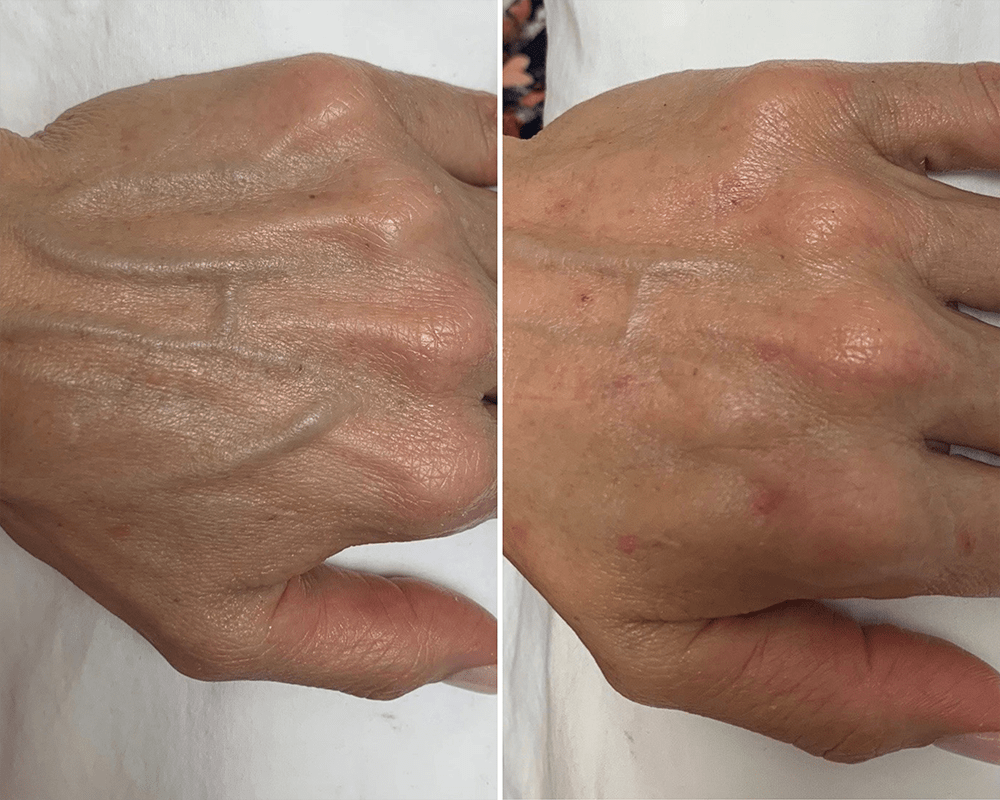
According to a study published in Plastic and Reconstructive Surgery, most people can accurately determine a person’s true age simply by viewing their hands. Despite this revealing fact, hands remain one of the most neglected areas in anti-aging skincare routines.
The disconnect between facial and hand appearance has become increasingly apparent in aesthetic medicine. Patients may achieve remarkable facial rejuvenation results, only to find their hands tell a different story. This mismatch creates an inconsistent appearance that can undermine confidence in both professional and personal settings.
The skin on the back of your hands differs dramatically from facial skin. Hand skin contains significantly less subcutaneous fat and measures thinner than facial tissue, which accelerates visible aging. This anatomical difference means hands lose collagen and elastin more rapidly, leading to earlier onset of wrinkles, sagging, and prominent underlying structures.
Environmental exposure compounds these vulnerabilities. Hands face constant assault from UV radiation, harsh weather, frequent washing, and chemical exposure. Unlike the face, which many people protect with daily SPF, hands rarely receive consistent sun protection.
Common signs include:
Today’s minimally invasive treatments address multiple aging concerns simultaneously without requiring surgery or extended recovery periods.
Dermal fillers represent a cornerstone of hand rejuvenation at Sanctuary Medical Aesthetic Center. Injectable hyaluronic acid products like Restylane Lyft restore lost volume beneath the skin surface, minimizing the appearance of prominent veins and tendons while smoothing wrinkles. The treatment takes approximately 30 to 40 minutes per session, with results appearing immediately and lasting between 12 and 18 months. For patients seeking comprehensive rejuvenation, hand treatments combine well with Botox for facial wrinkles.
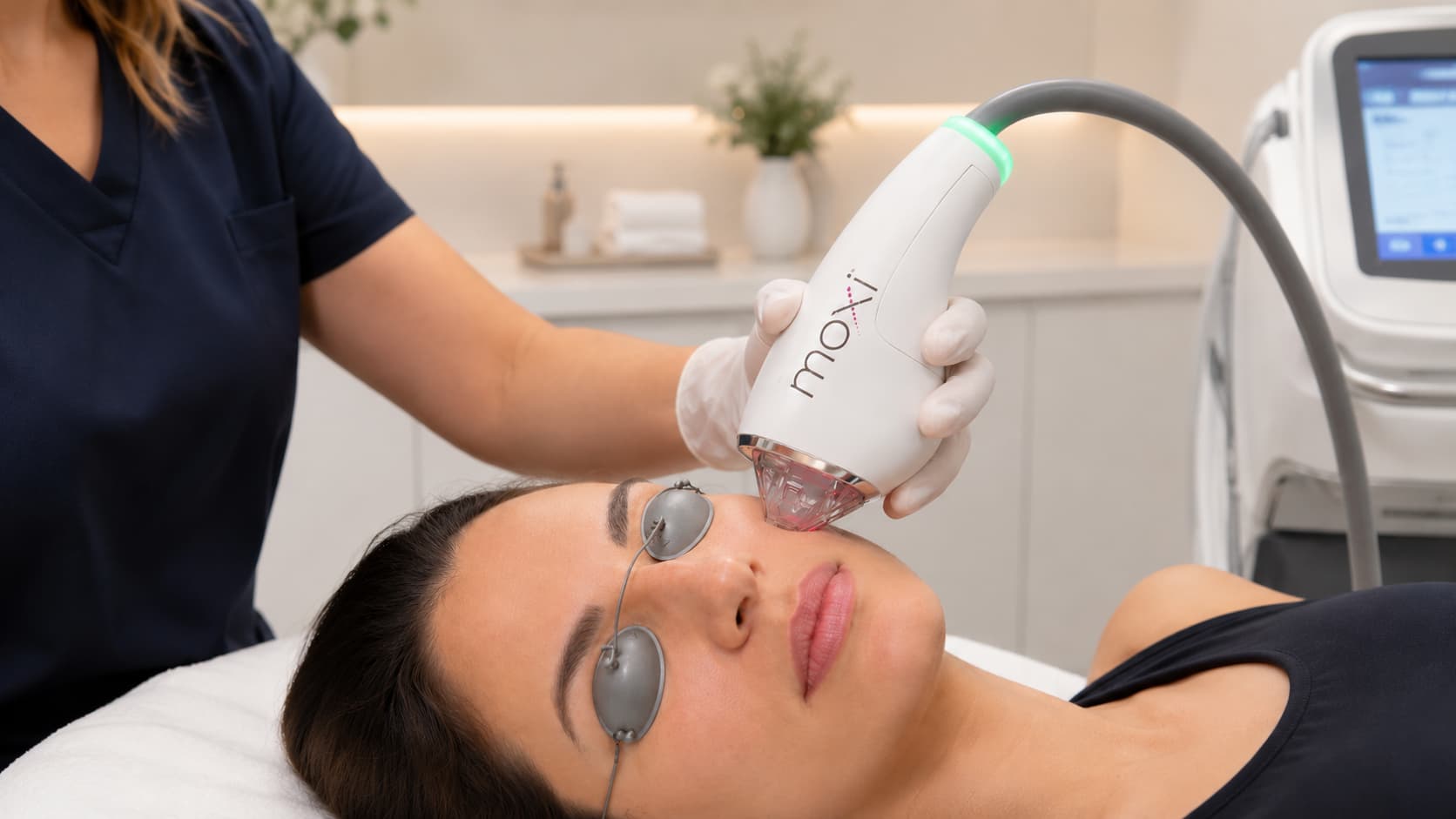
Laser treatments address pigmentation irregularities and textural concerns from sun exposure. The MOXI laser delivers fractionated laser energy, prompting the body to replace damaged cells with fresh tissue while effectively treating age spots and uneven skin tone.
Medical-grade chemical peels provide controlled exfoliation to remove damaged outer layers of skin, revealing fresher tissue while stimulating collagen production. Glycolic acid peels work particularly well for lightening age spots and smoothing fine lines. Genius RF Microneedling combines mechanical skin injury with radiofrequency energy to trigger collagen remodeling, tightening loose skin and improving texture over several months.
Preserving hand rejuvenation results requires ongoing care and protection. Daily application of broad-spectrum sunscreen with SPF 30 or higher remains the single most important preventive measure. Regular moisturization with rich hand creams containing hyaluronic acid, ceramides, and peptides helps maintain skin hydration. Your provider at Sanctuary Medical can recommend professional-grade skincare products tailored to your needs.
Protective measures include wearing gloves during household chores and protecting hands from cold weather. These simple habits significantly slow the aging process.
Hand rejuvenation treatments suit anyone bothered by visible signs of aging on their hands. Ideal candidates are in good general health with realistic expectations. You might consider these procedures if you notice prominent veins or tendons, age spots, thin or crepey skin texture, wrinkles or feel your hands don’t match your facial appearance. Most patients fall between ages 40 and 70.
Your hand rejuvenation journey begins with a comprehensive consultation to assess your concerns and discuss treatment options. The aesthetic team examines your skin quality, evaluates volume loss, and identifies specific areas needing attention.
Most non-surgical hand treatments involve minimal discomfort, with topical numbing cream applied before injectable procedures. Treatment sessions typically last 30 to 60 minutes. Patients can return to normal activities immediately following most procedures, though some temporary swelling or redness may occur. Results vary based on treatments selected, with dermal fillers providing immediate volume restoration while laser and microneedling show progressive improvement over several weeks.
Sanctuary Medical Aesthetic Center brings comprehensive expertise in aesthetic medicine to every hand rejuvenation treatment. Founded by board-certified plastic surgeon Dr. Jason Pozner, the practice houses South Florida’s largest laser center with cutting-edge equipment including the MOXI laser, Genius RF Microneedling, and multiple dermal filler options.
The experienced team works collaboratively to achieve optimal outcomes, understanding that hand rejuvenation requires balancing volume restoration, skin quality improvement, and natural appearance preservation.
Don’t let aging hands undermine your confidence. Sanctuary Medical Aesthetic Center offers proven, minimally invasive solutions that restore a youthful appearance to this often-neglected area. Schedule your consultation today to achieve consistency from head to fingertips.
How long do hand rejuvenation results last?
Results duration varies by treatment type. Dermal fillers typically last 12 to 18 months, while laser therapy results can last several years with proper sun protection.
Is hand rejuvenation painful?
Most patients report minimal discomfort. Topical numbing cream reduces sensation during injectable treatments. Laser and RF microneedling cause mild warmth that most people tolerate well.
Can hand rejuvenation treatments be combined with facial procedures?
Yes. Many patients coordinate hand rejuvenation with facial treatments for comprehensive anti-aging results.
A study published in the Journal of Cosmetic Dermatology examined a refined three-point injection technique for treating glabellar frown lines. Researchers found zero adverse events; no eyebrow ptosis, no eyelid drooping, no medial brow ptosis, no lateral frontalis hyperactivity. What made the difference wasn’t the product used. The study incorporated anatomical concepts into clinical practice, proving that technique and anatomical knowledge outweigh brand choice. Patients spend hours comparing Botox, Dysport, and Xeomin, but the injector’s skill matters more than what’s written on the vial.
Injectable neuromodulators temporarily relax facial muscles, which reduces wrinkles. Botox Cosmetic, Dysport, and Xeomin all contain the same active ingredient: botulinum toxin type A. This substance blocks nerve signals to targeted muscles. Less forceful muscle contractions mean fewer visible dynamic wrinkles from repeated expressions like frowning or squinting.
The three major brands work through identical mechanisms. Formulation differences exist; protein content varies, diffusion rates differ once the product goes beneath the skin. These factors influence how fast you’ll see results and how far the product spreads from injection points. But they don’t make or break treatment success.
Facial muscles work as a connected system. Each muscle’s movement affects its neighbors. Your frontalis muscle lifts eyebrows upward. The corrugator supercilii and procerus muscles pull them down, carving frown lines. Around your eyes, the orbicularis oculi creates crow’s feet during contractions.
Injectors need more than a map of muscle locations. They must understand how muscles interact during expressions. The Journal of Cosmetic Dermatology published research showing that a three-point injection technique prevents medial brow ptosis by respecting facial muscles’ three-dimensional architecture. Precision comes from anatomical knowledge, not product selection.
Consider the “line of convergence.” This imaginary line runs about 60 percent of the distance between eyebrows and hairline. It marks where the frontalis muscle’s upward and downward movements meet. Inject below this line at the right depth, and you avoid brow drooping. Finding this line takes skill and experience; qualities that matter regardless of which neuromodulator fills the syringe.
Brand selection pales compared to three technical factors that determine outcomes.
Getting the depth right keeps patients safe and delivers results. Crow’s feet treatment demands subdermal injections positioned at least one centimeter from the orbital rim. Go deeper, and you risk hitting the zygomaticus major muscle. That weakens the smile on the treated side; a complication nobody wants.
Injectors must hit only the muscles causing unwanted wrinkles while leaving adjacent muscles alone. Forehead treatments need injections at least two centimeters above the orbital rim to avoid brow ptosis. This measurement doesn’t change based on brand.
Dosage calculations separating good outcomes from disappointing ones involve muscle mass, treatment area, and desired effects. Different areas need different amounts:
Each face shows how its muscles interact. Practitioners who know what to look for assess wrinkle patterns during expressions, test muscle strength through patient movements, and spot asymmetries that need customized solutions.
Corrugator muscles pull harder in some patients, dragging the medial brow down more forcefully. Others have frontalis muscles that stay hyperactive, carving deep horizontal lines across the forehead. These differences mean two patients getting forehead treatment might use the same brand but need completely different injection patterns because their muscles behave differently.
Aesthetic medicine research now pushes individualized approaches instead of one-size-fits-all protocols. Ultrasound imaging studies before injection show that the line of convergence sits in different spots for different people. Standard injection patterns can’t deliver top results when anatomy varies this much, no matter which product you pick.
Botox Cosmetic, Dysport, and Xeomin all relax facial muscles without freezing them solid. Product differences become mostly irrelevant when the injector understands anatomy and applies good technique.
All three products last about three to six months before you need another treatment. They need several days to reach full effect. Dysport sometimes shows results a bit faster because of how it diffuses. But longevity and satisfaction come from accurate muscle targeting and right dosing, not brand names.
Starting treatments early might prevent deeper wrinkles from forming later. This benefit comes from keeping muscles consistently relaxed, not from special brand properties. Timing consistency and good technique beat switching products.
Combining neuromodulators with other treatments works well for many patients. Dermal fillers restore volume in cheeks, lips, and under-eye hollows. Neuromodulators relax dynamic wrinkles from muscle movement. Using both tackles multiple aging signs at once.
Looking at potential complications shows why technique matters so much.
Few complications frustrate patients more than drooping brows. This happens when product hits the frontalis muscle too close to the eyebrow, eliminating the upward lift that holds brows where they belong. Proper injection height stops this problem, and the product brand doesn’t matter.
Eyelid drooping occurs when neuromodulator migrates from where you injected it and reaches the levator palpebrae superioris muscle; the muscle that lifts your upper eyelid. Keep injection depth right and avoid excessive doses near the orbital rim to prevent this. Migration comes from technique problems, not brand choice.
Uneven results usually come from inconsistent injection patterns or ignoring existing facial asymmetries. Most faces have subtle differences between left and right sides. Good injectors notice these and adjust where they inject and how much they use.
That frozen look comes from over-treating or wiping out all muscle movement. The goal should be softer expression lines that still let faces move naturally. Getting this balance right takes artistic judgment and anatomical knowledge beyond brand loyalty.
Real anatomical understanding comes from extensive training, not just product manufacturer courses. Companies making Botox, Dysport, and Xeomin offer injection training, but these sessions focus on selling specific products instead of teaching broader anatomical principles.
Advanced injectors take it further. They study facial biomechanics, attend cadaver dissection courses, and learn three-dimensional facial anatomy. They train to identify anatomical landmarks by touch, visualize where muscles sit beneath skin, and predict how products will diffuse based on depth and location. This knowledge works with any brand.
Clinical experience builds on this foundation. Years of treating different facial structures and patient goals refine technique. Each face reveals something about muscle interaction and how small technique adjustments change outcomes. You can’t replace this learning by switching products.
Board certification in plastic surgery, dermatology, or related specialties signals solid medical knowledge. For physician assistants and other non-physician providers, look for certification plus extensive aesthetic training and proper medical oversight.
Ask about injection experience. How many treatments have they done? Do they attend continuing education on facial anatomy and injection techniques? Can they explain how they’ll assess your specific facial structure?
Look through before-and-after photos from real patients. Natural-looking results that preserve facial expression matter more than dramatic changes. Overly tight or frozen faces suggest aggressive approaches that might not suit your goals.
Watch what happens during consultation. Does the provider examine your face thoroughly? Do they ask you to make different expressions? Do they feel your muscles to check strength and position? These assessment steps show an individualized approach instead of cookie-cutter protocols.
The best providers offer more than just neuromodulators. Treatments like Genius RF Microneedling handle skin texture and tone issues that neuromodulators can’t fix alone, giving you more complete facial rejuvenation.
At Sanctuary Medical Aesthetic Center, Dr. Jason Pozner and his board-certified team know that beautiful, natural neuromodulator results require meticulous technique and deep anatomical knowledge. Our providers bring years of advanced training and artistic vision to create treatment plans built around your unique facial structure.
We start with detailed facial analysis to understand your muscle dynamics and aesthetic goals. Then we explain our injection strategy so you know exactly how we’ll achieve your desired results while keeping your facial expressions natural. New to neuromodulators or disappointed with past treatments? Our expertise makes the difference.
Schedule your complimentary consultation at our Boca Raton or Fort Lauderdale location today. Find out how proper technique and individualized care create the naturally refreshed appearance you’re looking for.
How long does it take to become skilled at neuromodulator injections?
True expertise takes several years of dedicated practice plus ongoing education. Basic injection techniques? You can learn those relatively quickly. But mastering facial anatomy nuances, understanding individual variations, and developing an artistic eye for optimal results takes time. Most experts say injectors should perform hundreds of treatments under supervision before working independently. Then they need to keep pursuing advanced training throughout their careers.
Can different neuromodulator brands be used together during the same treatment?
Technically possible, but most experienced injectors stick with one brand per session. This makes dosing calculations simpler and results easier to assess at follow-up. Mixing brands offers no real advantage and complicates figuring out which product caused unexpected outcomes. Want to try a different brand? Most providers suggest waiting until the current treatment wears off completely before switching.
Why do some people need touch-ups after neuromodulator treatments?
Touch-up appointments let providers check initial results and make small adjustments. Some areas need extra product for complete wrinkle reduction. Or slight asymmetries show up once initial injections kick in fully. These refinements show thoughtful, conservative approaches, not poor initial technique. Most experienced injectors schedule follow-ups two weeks after treatment to check results and make any needed adjustments at no extra charge.
Does facial structure affect how long neuromodulator results last?
Yes. Muscle strength, metabolism, and facial animation patterns all affect how long results stick around. Very strong facial muscles may metabolize neuromodulators faster than less active muscles. Highly expressive people who use facial muscles constantly throughout the day might see results fade sooner than people with more subdued expressions. These differences come from individual physiology, not the brand used.
How can I tell if an injector is using proper technique?
Watch for thorough facial assessment during your appointment; muscle palpation, checking facial movements, the works. The injector should explain their specific strategy for your face, not recite a standard protocol. Look for proper ergonomics, steady hands, methodical injecting instead of rushing. After treatment, you should get clear instructions about what to expect and when to call with concerns. Proper technique also means scheduling enough appointment time instead of cramming in high patient volumes.

Those stubborn fat deposits that won’t budge despite your best efforts? They frustrate countless people who maintain consistent workout routines and healthy diets. Non-surgical body contouring has changed the fat reduction landscape, but the growing number of treatment options makes it tough to know where to start.
Sanctuary Medical Aesthetic Center in Boca Raton and Fort Lauderdale offers several FDA-cleared body contouring technologies. The treatments work through different mechanisms, address varying concerns and produce unique results. Knowing these differences puts you in a better position to pick the right approach.
CoolSculpting Elite relies on cryolipolysis, which freezes fat cells without harming surrounding tissue. Fat cells freeze at higher temperatures than skin, nerves and other tissues. That’s the simple science behind why this works. The dual-applicator system tackles two areas at once, cutting treatment time by up to 50 percent versus traditional CoolSculpting. Frozen fat cells crystallize and die, then get flushed out through your lymphatic system over the next few months.
You can treat nine different body areas: abdomen, flanks, thighs, upper arms and under the chin. Visible changes show up within two to three months. Full results take several treatments, with most people seeing 20 percent to 25 percent less fat in treated zones. The cooling panels bend to match your body’s curves, which helps deliver even results.
EMSCULPT NEO combines radiofrequency heating with high-intensity electromagnetic energy. This dual approach burns fat and builds muscle through thousands of supramaximal contractions your regular gym routine can’t replicate.
Radiofrequency heat breaks down fat cells. Electromagnetic energy triggers deep muscle contractions that build strength and tone. Clinical data shows an average 30 percent fat drop and 25 percent muscle gain after completing the treatment series. Each 30-minute session requires zero downtime.
This option fits patients who want both fat reduction and muscle definition. Treatment zones include the abdomen, buttocks, thighs and arms. Changes become apparent within three months and keep improving when paired with smart eating and exercise.
VelaShape uses four technologies at once: infrared light, radiofrequency energy, vacuum and mechanical massage. The focus here is cellulite reduction and skin tightening, not major fat loss. Heat increases drainage and triggers collagen production for smoother, firmer skin.
Vacuum and rollers break up the fibrous bands creating that dimpled look. Infrared light and radiofrequency penetrate deep to heat fat cells and rev up metabolism. Most people need four to six sessions for best results.
This treatment shines for smoothing dimpled texture and trimming circumference on thighs, buttocks and abdomen. It feels like a warm massage. You walk out and get back to your day. Results show up gradually as your body responds over several weeks.
CoolSculpting Elite zeroes in on fat reduction through freezing. It’s ideal for pinchable fat deposits when you want permanent fat cell removal but don’t care about muscle building. Sessions run 35 to 60 minutes per area. You’re back to normal activities immediately.
EMSCULPT NEO takes the broadest approach by hitting fat and muscle simultaneously. Pick this if you’re after improved body composition and athletic definition. The treatment stays comfortable without the cooling or heating sensations other options produce.
VelaShape targets patients more worried about cellulite and loose skin than fat removal. You get subtle body contour improvements and better skin texture, but not the permanent fat cell destruction the other treatments deliver.
Your best body sculpting treatment hinges on what bothers you most. Stubborn fat? Weak muscle tone? Cellulite? Maybe all three? Your body type, target zones and timeline all factor into the decision.
Board-certified providers at Sanctuary Medical Aesthetic Center review your medical background, body composition and aesthetic wishes. They take measurements, set realistic expectations and sometimes order imaging to map fat distribution. This thorough evaluation points you toward the right solution.
Combining treatments works well for many patients. CoolSculpting Elite melts abdominal fat while EMSCULPT NEO strengthens your core. VelaShape smooths thigh cellulite after fat reduction. A personalized consultation maps out the best game plan.
Pricing differs considerably across these technologies. CoolSculpting Elite needs fewer sessions than VelaShape but costs more per visit. EMSCULPT NEO sits in the middle. Most patients consider the investment worthwhile for permanent fat reduction and results that last.
Sanctuary Medical Aesthetic Center provides free consultations to match you with the right body contouring solution. Dr. Jason Pozner and his team will evaluate your concerns, talk through your goals and build a custom treatment plan. South Florida’s largest laser facility gives you access to the newest technologies for reshaping your physique.
Schedule your free consultation at our Boca Raton or Fort Lauderdale location. Start your journey toward greater body confidence.
CoolSculpting Elite produces permanent results because destroyed fat cells leave your body for good. EMSCULPT NEO results hold up for months to years with maintenance. VelaShape needs occasional touch-ups to keep cellulite at bay. All treatments work best long-term when you maintain healthy habits.
Absolutely. Combining treatments often produces better results. CoolSculpting Elite removes fat while EMSCULPT NEO builds muscle. VelaShape smooths skin texture after fat reduction. Your provider will suggest the most effective pairing based on your goals.
These treatments don’t require significant downtime. CoolSculpting Elite might cause brief redness or numbness. EMSCULPT NEO lets you resume activities right away. VelaShape patients return to normal routines immediately. Mild soreness can happen but won’t disrupt your daily schedule.
CoolSculpting Elite usually takes one to three sessions per area. EMSCULPT NEO protocols call for four sessions across two weeks. VelaShape requires four to six treatments for optimal results. Your provider designs a schedule based on your goals and treatment zones.

Your 20s mark a turning point for skin health. Most people this age focus on treating breakouts or covering blemishes, but this decade is the right time to build preventative care habits that pay off for years.
Skin aging starts earlier than you might expect. Collagen production begins declining around your mid-20s at roughly 1 percent each year. Sun damage from childhood and teenage years shows up as texture changes, and expression lines appear around the eyes and forehead.
Preventative aesthetic treatments let you address these changes before they settle in. It’s like keeping up with car maintenance instead of waiting for major repairs. Starting now means you’ll need less aggressive treatments down the road.
Preventative Botox has become popular with younger patients. It temporarily relaxes the facial muscles that create dynamic wrinkles. Starting in your 20s helps stop expression lines from turning into permanent creases.
Most patients start with low-dose treatments in areas that age first. The forehead, area between the brows and crow’s feet respond well to this approach. Results last three to four months, fitting easily into busy schedules.
Preventative Botox differs from corrective treatments in both dosage and timing. Younger patients need smaller amounts and can sometimes stretch out sessions as their facial muscles learn to move with less force.
Drugstore products only reach the skin’s surface. Medical-grade skincare delivers higher concentrations of active ingredients that work deeper.
Retinoids lead the pack for anti-aging prevention. These vitamin A derivatives speed up cell turnover, boost collagen and reverse sun damage. Starting retinoid use now builds protection against aging signs that typically show up later.
Antioxidant serums with vitamins C and E fight free radicals that damage collagen and elastin. Daily sunscreen blocks UV radiation, which causes most premature aging. Your morning routine should pair antioxidants with broad-spectrum SPF 30 or higher. Save active ingredients like retinoids for nighttime when skin repairs itself.
Laser treatments have changed preventative skin care. Gentle options like MOXI laser improve texture and tone with minimal downtime.
These treatments create controlled micro-injuries that activate healing. Your body responds by making fresh collagen and elastin, which smooths and strengthens skin. Regular sessions tackle early sun damage while keeping your complexion bright and even.
Laser treatments in your 20s work two ways. They fade hyperpigmentation from acne or sun while building collagen that keeps skin firm. Quarterly treatments typically maintain good results.
Dermal fillers do more than plump lips or add cheek volume. They work for prevention too.
Small amounts can support spots that lose volume early, like temples and under-eye hollows. This subtle boost keeps proportions youthful and stops the sunken look that comes with aging. Hyaluronic acid fillers blend naturally with tissue and pull in moisture for both quick and lasting benefits.
Some patients use fillers to balance asymmetries or refine features. Light-handed application works with your natural structure instead of changing it.
Preventative aesthetics means maintaining what you have, not chasing dramatic change. A board-certified dermatologist or plastic surgeon can assess your skin and build a treatment plan around your concerns, skin type and goals.
Money spent on skin care in your 20s multiplies over time. Patients who start young typically need fewer intense treatments as they age and keep their youthful look longer.
Ready to begin your preventative aesthetics journey? Sanctuary Medical Aesthetic Center in Boca Raton and Fort Lauderdale provides thorough consultations to develop your personalized treatment plan. Our board-certified plastic surgeons and dermatologists focus on preventative care that protects skin health and appearance for decades. Contact us today to schedule your consultation and learn how early action preserves your natural beauty.
Most dermatologists suggest considering preventative Botox when expression lines stick around even with a relaxed face. This happens for many people in their mid-to-late 20s. Treatment at this stage stops lines from becoming permanent wrinkles.
Medical-grade skincare products pack much higher concentrations of active ingredients than drugstore versions. These formulas have been tested in clinical settings and proven to work on specific skin problems. The upfront cost is higher, but better results often make them cheaper over time.
Treatment timing depends on what you choose and what your skin needs. Botox needs refreshing every three to four months. Chemical peels and facials work well monthly or quarterly. Your provider will suggest a schedule based on your goals and budget.
Preventative aesthetics targets subtle improvements and upkeep rather than big changes. Skilled providers help you look well-rested and refreshed, nothing more. The aim is aging gracefully, not freezing time.
Acne scars affect more than physical appearance. These marks shape how people see themselves, often lasting long after breakouts clear. Over-the-counter treatments rarely work for moderate to severe scarring. That’s when medical-grade interventions become necessary.
South Florida residents have access to sophisticated scar revision technologies. At Sanctuary Medical Aesthetic Center’s Boca Raton and Fort Lauderdale, Fla., locations, board-certified professionals use proven methods and advanced equipment to target different scar types. The practice operates South Florida’s largest laser facility, with treatment options that extend beyond typical medical spas.
Atrophic scars create depressed areas where tissue loss occurred during healing. Ice pick scars form narrow, deep indentations. Boxcar scars show wider depressions with defined edges. Rolling scars create undulating texture across larger areas. Each responds differently to treatment, so accurate diagnosis matters before starting any revision protocol.
Hypertrophic scars develop when excess collagen forms raised, thickened tissue. Post-inflammatory hyperpigmentation leaves dark spots after inflammation fades. These discolored areas aren’t technically scars, but they cause similar cosmetic concerns and often appear alongside actual scarring.
Successful treatment depends on matching technology to specific scar characteristics. Surface treatments can’t reach deeper structural problems. Aggressive approaches might be overkill for mild texture issues. A thorough skin analysis determines which combination delivers optimal results.
Genius RF Microneedling combines mechanical needling with radiofrequency energy. It creates controlled micro-injuries that trigger natural healing responses. The treatment reaches deeper dermal layers where scar tissue forms, stimulating new collagen without damaging surface skin. Real-time impedance monitoring adjusts energy delivery throughout each procedure.
This dual-action approach targets rolling and boxcar scars effectively. Needles create channels for product penetration. Radiofrequency heat remodels existing collagen structure. Patients typically need three to six sessions spaced four to six weeks apart. Improvements continue for months after the final treatment as collagen rebuilding progresses.
RF microneedling suits all skin tones, unlike some laser procedures. The technology delivers energy below the epidermis, which reduces surface damage and post-inflammatory hyperpigmentation risks. Topical numbing cream applied before treatment minimizes discomfort during the 45-minute procedure.
Fractional laser resurfacing creates microscopic treatment zones while leaving surrounding tissue intact. This speeds healing. The precision allows aggressive correction in targeted areas without the extended downtime of traditional full-surface lasers. Untreated skin between zones acts as a reservoir of healthy cells that accelerate recovery.
The Halo laser uses advanced hybrid technology. It combines ablative and non-ablative wavelengths in one treatment. Ablative energy removes damaged surface layers. Non-ablative wavelengths penetrate deeper to stimulate collagen growth. Dynamic Thermal Optimization monitors skin temperature continuously, automatically adjusting treatment intensity for consistent results.
Results appear within four to six weeks as new skin replaces damaged tissue. The controlled injury pattern means patients experience manageable recovery (usually three to five days of redness and peeling) instead of the weeks required by older laser types.
Medical-grade chemical peels use calibrated acid formulations to remove damaged surface layers. Medium-depth peels with trichloroacetic acid and deeper phenol peels improve mild to moderate acne scarring through controlled exfoliation and collagen renewal. The strength and acid type determine penetration depth and recovery time.
The chemical solution causes upper skin layers to separate and peel away over several days. Smoother tissue emerges beneath. As healing progresses, increased collagen production fills depressed areas and evens out texture irregularities. Providers may apply multiple acid layers to reach targeted depths.
Peels perform best on shallow scarring and pigmentation concerns. Deeper scars need combination therapy for better improvement than chemical exfoliation alone. Many patients schedule peels between laser sessions to maintain results.
Dermal fillers provide immediate correction for depressed acne scars by restoring volume beneath affected areas. Hyaluronic acid-based fillers or longer-lasting options like Bellafill lift indented scars to match surrounding skin level. The injectable filler physically raises depressed scar tissue from below, creating a smoother surface.
This works particularly well for isolated, deeper boxcar or ice pick scars that don’t respond adequately to resurfacing treatments alone. Filler injections require minimal downtime. Results appear immediately, though repeat treatments become necessary as the body gradually absorbs temporary fillers. Hyaluronic acid fillers last six to 12 months. Bellafill offers results lasting five years or more.
Practitioners often use fillers strategically alongside resurfacing methods for comprehensive scar revision. Filling deep depressions while smoothing surface texture creates better improvement than either technique alone.
Advanced scar revision rarely depends on a single treatment type. Layering complementary technologies addresses multiple scar characteristics at once. Laser resurfacing improves texture. Fillers target specific deep depressions that lasers can’t fully correct. This multimodal approach has become standard for treating moderate to severe scarring.
Treatment sequences matter. Practitioners start with deeper interventions like fractional lasers or RF microneedling. They add surface refinement through chemical peels once foundational improvements develop. This staged approach builds results progressively while managing side effects and downtime between procedures.
Expect multimonth treatment timelines. Significant scar revision takes patience as skin responds to controlled injuries through gradual healing and collagen remodeling. Most comprehensive plans span six to 12 months from initial consultation to final results. Maintenance treatments are recommended annually.
Sanctuary Medical Aesthetic Center offers comprehensive acne scar treatment in Boca Raton and Fort Lauderdale, Fla. Our team, led by Dr. Jason Pozner, uses South Florida’s largest laser facility to create customized treatment plans for your specific scar patterns. Schedule your consultation today to learn which advanced treatments can help you achieve smoother, more confident skin.
Most patients need three to six sessions for significant improvement, though this varies based on scar severity and treatment type. Fractional lasers and RF microneedling require multiple sessions spaced four to six weeks apart. Your provider will create a personalized treatment timeline during your consultation based on your specific scarring pattern.
Initial improvements typically appear four to six weeks after treatment as your skin produces new collagen. Results continue developing for three to six months following your final session. Patience proves important as the skin’s natural healing processes take time to remodel scar tissue.
Most modern treatments, particularly RF microneedling, work safely across different skin types. However, certain laser wavelengths carry higher risks for darker skin tones. Board-certified providers assess your skin type during consultation to recommend the safest, most effective options for your complexion.
Downtime varies by treatment intensity. Chemical peels and RF microneedling typically require three to seven days of visible healing. Fractional laser treatments may involve five to seven days of redness and flaking. Most patients can return to work and normal activities within a week, though you’ll need to avoid sun exposure and follow specific aftercare protocols.
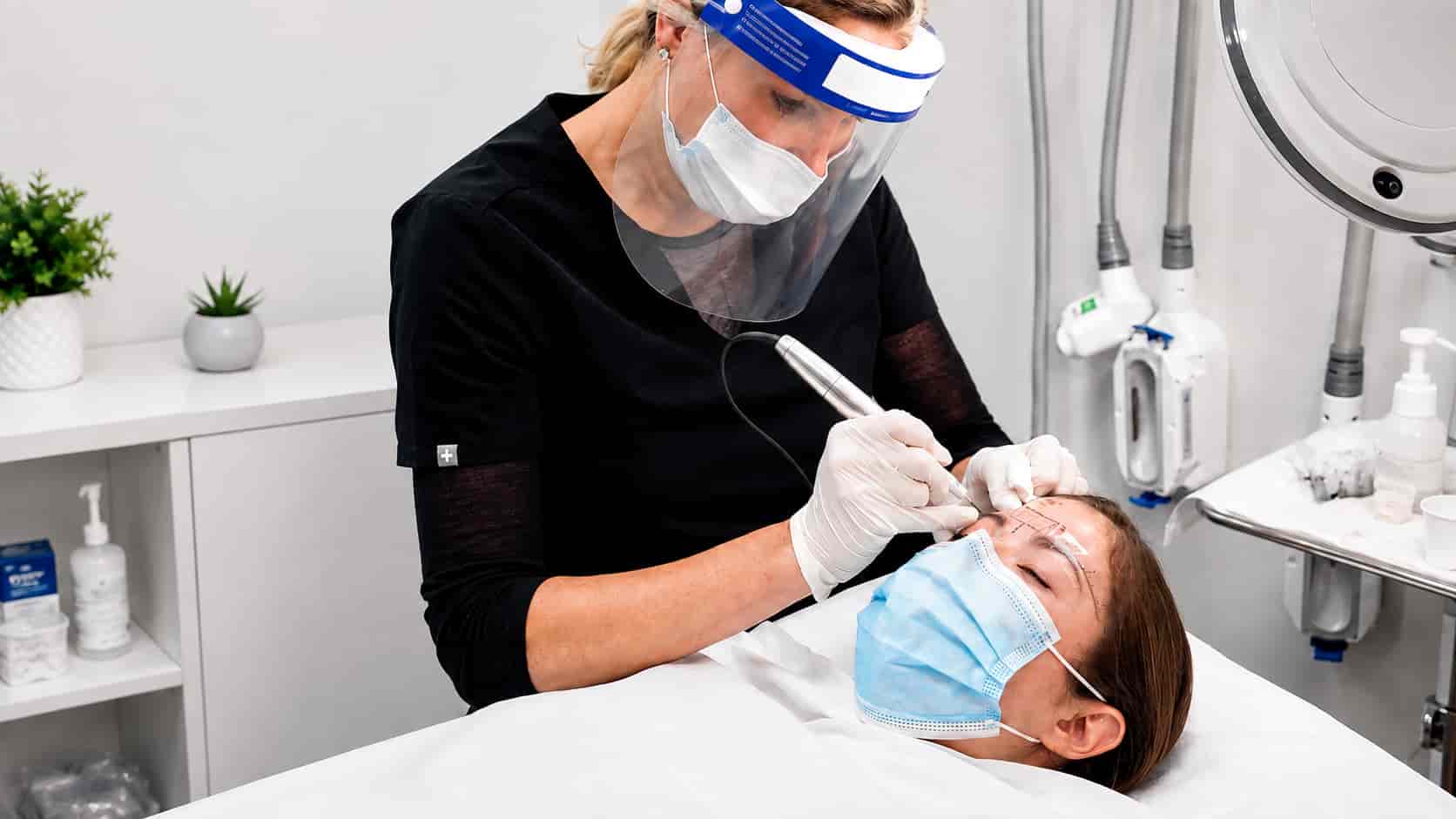
Patients researching skin tightening almost always run into the same two names within the first few minutes of searching. One is Ultherapy®, an ultrasound-based treatment that has been around for over a decade.
The other is RF microneedling, a newer approach that combines microneedles with radiofrequency energy. Both promise firmer, more lifted skin without surgery, which makes the difference between them genuinely confusing.
At Sanctuary Medical Aesthetic Center in Boca Raton and Fort Lauderdale, we do not perform Ultherapy®. We built our non-surgical skin tightening program around Genius RF Microneedling instead, and the reasoning behind that choice is worth understanding if you are trying to decide between the two.
Ultherapy® is an FDA-cleared treatment that uses focused ultrasound energy to heat tissue beneath the skin’s surface, targeting the same structural layer addressed in surgical facelifts. Some systems include real-time imaging that allows a provider to visualize tissue depth during treatment.
Ultherapy® is most commonly used on the brow, chin, neck, and décolletage, and a single session can take an hour or more depending on the areas treated.
Results develop gradually over two to three months as collagen rebuilds, and the effect generally lasts around a year. Patients often describe the sensation during treatment as more intense than other non-surgical options, since the ultrasound energy reaches deeper tissue layers.
RF microneedling works through a different combination of mechanisms entirely. Fine needles create controlled micro-injuries in the skin while simultaneously delivering radiofrequency energy directly into the deeper tissue layers.
That dual action triggers the body’s natural collagen and elastin production in response to both the mechanical injury and the heat, rather than relying on ultrasound energy alone.
Our Genius RF Microneedling treatment allows providers to adjust needle depth precisely, which means the same device can address surface-level concerns like acne scarring and texture as well as deeper skin laxity in a single treatment plan.
A 2026 systematic review published in the Journal of Cosmetic Dermatology, synthesizing 20 studies and 558 patients, found that RF microneedling consistently produced significant improvements in skin texture and tightening, along with a favorable safety profile and no serious complications reported.
Patient satisfaction exceeded 90 percent in most of the studies reviewed.
That combination of strong outcomes, adjustable depth, and a well-tolerated safety profile is exactly why RF microneedling became the foundation of our skin tightening program rather than an ultrasound-based alternative. It gives our providers more precision to customize treatment to what each patient’s skin actually needs.
The core difference comes down to mechanism and precision. Ultherapy® delivers ultrasound energy at fixed depths designed to reach the same tissue layer addressed surgically, which makes it effective for lifting but limits how much a provider can customize the treatment to surface-level concerns.
RF microneedling’s adjustable needle depth lets a provider treat multiple layers and multiple concerns, texture, scarring, and tightening, within the same session.
Downtime also differs. RF microneedling typically involves mild redness and swelling that resolves within a few days, while Ultherapy® generally has little visible downtime but can involve more discomfort during the treatment itself due to the depth of energy delivery.
Candidacy differs slightly too. Ultherapy® tends to be recommended for patients with mild to moderate skin laxity who want a single, more intensive session focused specifically on lifting.
RF microneedling suits a broader range of patients and concerns, since the same treatment plan can address early signs of laxity alongside texture, pore size, or acne scarring that an ultrasound-based treatment does not directly target.
A topical numbing cream is applied before treatment to keep the procedure comfortable. Most patients complete a series of sessions rather than a single treatment, spaced several weeks apart, to build progressive improvement. Mild redness and swelling immediately following treatment is normal and typically settles within a few days.
Your provider will determine session count and needle depth based on your specific skin concerns during a consultation, rather than applying the same protocol to every patient regardless of what their skin actually needs.
Initial improvement is often visible within a few weeks as swelling resolves, though full results continue to develop over roughly three months as collagen remodeling progresses. Many patients maintain their results for a year or more with proper skin care, and some see benefits that continue building well beyond that with periodic maintenance sessions.
Sanctuary Medical Aesthetic Center has served more than 65,000 patients across Boca Raton and Fort Lauderdale, earning more than 600 five-star reviews over 25 years in business. Our providers are trained specifically on the technology we offer, which means every RF microneedling treatment plan is built around your actual skin rather than a generic protocol.
RF microneedling pairs well with other treatments in our practice, including Sofwave™ for patients who want an ultrasound-based option alongside their microneedling plan.
I’ve already had Ultherapy® elsewhere. Can I still do RF microneedling?
Yes. There is no medical reason you cannot have RF microneedling after Ultherapy® was performed elsewhere. The two work through different mechanisms and address slightly different concerns, so many patients combine both approaches over time rather than choosing one permanently.
Is RF microneedling safe for all skin tones?
Yes, RF microneedling is generally considered safe across a wide range of skin tones, since the energy is delivered through the needles rather than relying on light-based technology that can carry more risk for deeper skin tones.
How many RF microneedling sessions will I need?
Most patients complete a series of two to four sessions, spaced several weeks apart, though your provider will determine the right number based on what your skin actually needs during a consultation.
Can I combine RF microneedling with Sofwave™ in the same appointment?
It depends on the areas being treated and your provider’s recommendation. Some patients do both in the same visit, while others space the two treatments a few weeks apart to allow proper healing in between.
If you have been comparing Ultherapy® and RF microneedling and want an honest recommendation based on your actual skin, a consultation is the best next step. Our team will walk through your goals and explain exactly what to expect before any treatment begins.
Book your appointment with Sanctuary Medical Aesthetic Center and find out whether RF microneedling is the right fit for your skin.
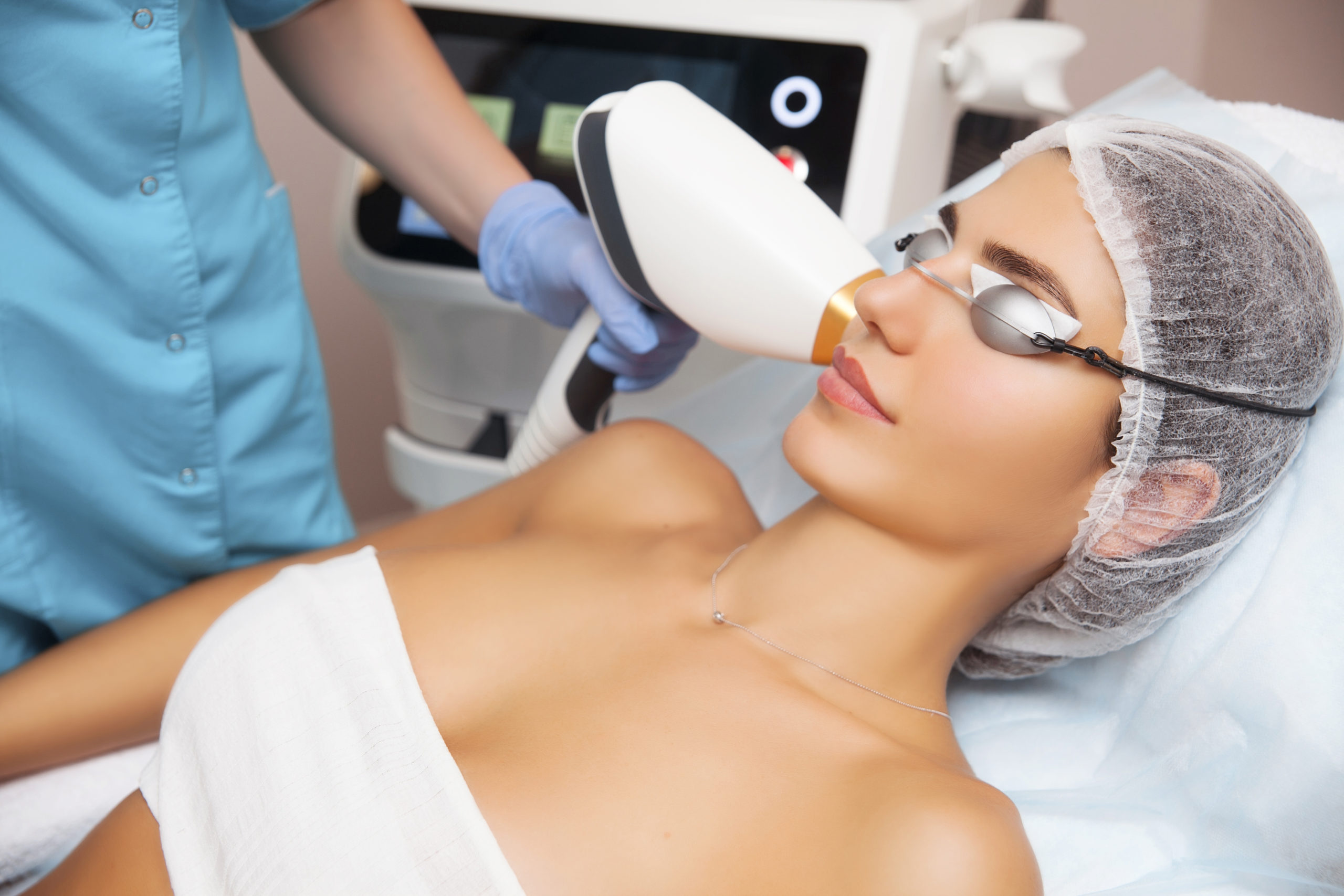
Aesthetic medicine has evolved beyond traditional injectables and laser treatments. Regenerative aesthetics represents a shift toward harnessing the body’s natural healing mechanisms to address signs of aging at a cellular level. Platelet-rich plasma (PRP) and stem cell treatments have emerged as promising options for patients seeking natural anti-aging solutions.
These treatments stimulate collagen production, improve skin texture and promote cellular renewal through the body’s own biological processes. At Sanctuary Medical Aesthetic Center in Boca Raton and Fort Lauderdale, Florida, Dr. Jason Pozner and his team integrate regenerative treatments into comprehensive aesthetic care plans.
Regenerative aesthetics use biological materials derived from your own body to repair and rejuvenate aging skin. Rather than adding foreign substances or relying solely on external treatments, these therapies activate your body’s natural repair mechanisms.
PRP therapy begins by drawing a small amount of your blood, processing it to concentrate the platelets and injecting this platelet-rich plasma back into treatment areas. The platelets release growth factors that trigger tissue regeneration and collagen production. This concentrated formula contains up to 10 times more platelets than normal blood, creating a powerful regenerative effect.
Stem cell treatments in aesthetics typically utilize adipose-derived (fat) stem cells or bone marrow stem cells. These cells differentiate into various cell types and secrete bioactive molecules that promote tissue repair and rejuvenation. Their multipotent nature allows them to adapt to the specific needs of aging tissue.
PRP has gained recognition for addressing multiple signs of aging. The concentrated platelets contain growth factors that stimulate fibroblast activity, leading to increased collagen and elastin production. This process improves skin texture, reduces fine lines and creates a more youthful appearance.
Common treatment areas include the face, neck, décolletage and hands. Many patients combine PRP with microneedling for enhanced results. The microneedling creates controlled micro-injuries that allow the PRP to penetrate deeper while simultaneously triggering the body’s wound-healing response. This combination approach often produces more dramatic improvements in skin quality and texture.
Results develop gradually over several weeks as collagen remodeling occurs. Most patients undergo a series of three or four treatments spaced several weeks apart for optimal outcomes. The gradual improvement timeline means results appear natural rather than sudden or obvious.
PRP therapy has also proven effective for treating hair loss and thinning. When injected into the scalp, the growth factors in platelet-rich plasma stimulate dormant hair follicles and promote new hair growth. This treatment can help patients experiencing androgenetic alopecia, thinning hair or hair loss related to aging. Many patients seek PRP specifically for hair restoration, as it offers a natural alternative to medications or surgical hair transplants. Results typically become visible after three to four monthly treatments, with continued improvement over the following months.
Stem cell therapy represents an advanced approach to facial rejuvenation. Adipose-derived stem cells are typically harvested through a minor liposuction procedure, then processed and reinjected into facial areas showing signs of aging.
These stem cells release growth factors and cytokines that promote tissue regeneration. They help restore volume, improve skin quality and address texture concerns. The treatment may be combined with fat grafting for facial volumization, providing both structural support and regenerative benefits.
Stem cell treatments address deeper signs of aging compared to traditional fillers. The regenerative properties may provide longer-lasting results by improving tissue quality rather than simply filling space. Unlike synthetic fillers that eventually dissolve, stem cell therapy works to regenerate your own tissue for more sustainable outcomes.
Regenerative treatments offer several advantages for patients concerned about natural-looking results. Since these therapies use your own biological materials, the risk of allergic reactions or rejection is minimal. This biocompatibility makes them safe options for patients with sensitivities to synthetic products.
Results develop gradually, creating subtle improvements that appear natural. Friends and family may notice you look refreshed without being able to pinpoint exactly what changed. This subtlety appeals to patients who want rejuvenation without an obvious “done” appearance.
These treatments can be particularly beneficial for South Florida residents who spend significant time outdoors. Sun exposure accelerates skin aging, and regenerative therapies help counteract photodamage by promoting cellular repair and renewal. The treatments work from within to strengthen skin’s resilience against environmental stressors.
Regenerative aesthetics also complement other treatments. Many patients combine PRP or stem cell therapy with laser treatments, chemical peels or neuromodulators for comprehensive rejuvenation.
Ideal candidates for regenerative aesthetics are adults in good health who want to address early to moderate signs of aging. These treatments work best for patients with realistic expectations about gradual, natural-looking improvements.
PRP therapy is appropriate for patients with mild to moderate skin laxity, fine lines and texture concerns. It’s particularly effective for improving skin quality and promoting a healthy glow. Patients with sun damage, acne scarring or uneven skin tone often see significant improvements.
Stem cell treatments may be better suited for patients with more advanced aging signs who want volumization along with tissue rejuvenation. A consultation with a qualified provider can help determine which approach aligns with your goals. Age, skin condition and treatment objectives all factor into the decision.
Patients should be willing to commit to a treatment series, as regenerative aesthetics typically require multiple sessions for optimal results. Maintenance treatments may be recommended annually or semi-annually to sustain improvements over time.
Sanctuary Medical Aesthetic Center brings cutting-edge regenerative treatments to Boca Raton and Fort Lauderdale. As South Florida’s largest laser facility, we combine advanced technology with expert medical care under the direction of board-certified plastic surgeon Dr. Jason Pozner.
Our team takes a comprehensive approach to aesthetic medicine, creating individualized treatment plans that address your specific concerns. We combine regenerative therapies with our full range of services to help you achieve natural, long-lasting results.
Call (561) 247-2958 to schedule a consultation at our Boca Raton or Fort Lauderdale location. Discover how regenerative aesthetics can help you look and feel your best.
PRP results typically last 12 to 18 months. The longevity depends on factors including age, lifestyle, skincare routine and sun exposure. Maintenance treatments can help sustain results over time.
Most patients experience minimal downtime. PRP treatments may cause mild redness and swelling for 24 to 48 hours. Stem cell treatments may involve slightly longer recovery depending on the harvesting method used.
The U.S. Food and Drug Administration regulates these treatments under specific guidelines. PRP using autologous blood is considered a medical procedure. Stem cell treatments must follow FDA regulations regarding minimal manipulation and same-surgical-procedure use.
Cost varies based on treatment type, area size and number of sessions needed. PRP typically ranges from $600 to $1,500 per session. Stem cell treatments generally cost more due to the harvesting and processing involved. A consultation provides accurate pricing for your specific treatment plan.
The clean beauty movement has changed how we approach skincare, demanding transparency and sustainability from brands. But here’s the problem: many consumers find that their clean products look great on the label yet fail to deliver visible results. Fortunately, you don’t have to choose between clean formulations and clinical effectiveness anymore.
Patients at Sanctuary Medical Aesthetic Center in Boca Raton and Fort Lauderdale often ask about skincare that matches their health values without sacrificing results. The solution comes down to science-backed clean formulations with proper concentration levels that actually penetrate your skin.
Clean beauty means formulating products without ingredients linked to health risks or environmental harm. You won’t find parabens, phthalates, synthetic fragrances, sulfates, or questionable preservatives in these formulations. But true clean beauty goes deeper than avoiding certain ingredients.
Sustainable skincare looks at a product’s full journey, from how ingredients are sourced to what happens after you toss the empty bottle. Companies serious about clean beauty source ingredients ethically, reduce water waste during manufacturing, choose recyclable or biodegradable packaging, and keep their supply chains transparent. Some pursue third-party certifications like Leaping Bunny for cruelty-free standards or B Corporation status to verify their environmental and social commitments.
Here’s where it gets tricky: removing certain synthetic ingredients can weaken a product’s stability or performance. Medical-grade formulations solve this problem through advanced delivery systems and carefully chosen active ingredients that keep products both safe and effective.
Medical-grade skincare contains higher concentrations of active ingredients than what you’ll find at department stores or drugstores. These products go through rigorous testing and are sold only through licensed medical professionals who evaluate your specific skin needs before recommending anything.
“Medical-grade” means pharmaceutical manufacturing standards apply. Products maintain consistent potency batch after batch, penetrate deeper skin layers reliably, and have clinical studies proving they work. Take vitamin C serums: medical-grade versions use stabilized L-ascorbic acid at concentrations scientifically proven to increase collagen and fade dark spots.
Bioavailability makes all the difference. Molecular size and formulation technology determine whether active ingredients actually reach the dermis where cellular changes happen. A 20 percent glycolic acid peel at a medical spa produces far stronger results than a 10 percent glycolic cleanser from a retail store because of how deeply it works.
Professional guidance protects your skin. Dermatologists and medical aestheticians examine your skin type, current concerns, and sensitivities before suggesting products. This prevents irritation and helps you build a routine where products complement each other instead of fighting against your skin.
Real innovation happens where clean beauty meets medical-grade science. Botanical extracts with proven activity, plant stem cell-derived growth factors, and biomimetic peptides show that effective ingredients don’t have to be synthetic.
Bakuchiol works like retinol but causes less irritation. Hyaluronic acid naturally exists in your body and can hydrate at different molecular weights depending on formulation. Niacinamide calms inflammation while strengthening your moisture barrier. These ingredients pass both clean beauty standards and clinical performance tests.
Medical aestheticians analyze your skin and suggest products that honor your preference for clean ingredients while delivering real results. This targeted approach saves you from wasting money on products that don’t work for your skin. Your pH balance, barrier function, and particular concerns guide every recommendation.
In-office treatments speed up what your clean skincare routine can accomplish. Genius RF Microneedling triggers natural collagen production by creating tiny, controlled injuries that activate your healing response. This builds a stronger foundation for your topical products to work on.
Laser treatments tackle hyperpigmentation, sun damage, and texture problems without chemical interventions. Once professional procedures improve your baseline skin quality, your clean products absorb better and perform more effectively. Combining in-office care with your home routine creates results neither approach delivers on its own.
Persistent issues like acne or melasma respond better when you pair medical-grade clean skincare with targeted dermatology services. Board-certified dermatologists prescribe treatments aligned with your values that actually solve your concerns.
Your body’s condition affects your skin too. Treatments like EMSCULPT NEO boost circulation and lymphatic drainage, supporting skin health from within. Improved blood flow delivers more oxygen and nutrients to skin cells while carrying away cellular waste more efficiently.
At Sanctuary Medical Aesthetic Center, we recognize that your skincare approach reflects your values. Our board-certified plastic surgeons, dermatologists, and medical aestheticians build customized regimens that honor your commitment to clean beauty while producing medical-grade outcomes.
Schedule a consultation at our Boca Raton or Fort Lauderdale location to explore sustainable skincare backed by clinical research. Call 561-247-2958 or book online to begin working with products that match your standards and expectations.
Medical-grade products pack higher concentrations of active ingredients and follow pharmaceutical manufacturing standards. Licensed medical professionals sell them exclusively after evaluating whether the products suit your skin and concerns. Clinical studies back up their effectiveness claims, and they penetrate much deeper than drugstore alternatives.
Plenty of natural ingredients produce excellent results when formulated correctly. Botanical extracts, plant-derived peptides, and naturally occurring acids work well at the right concentrations. What matters is stability and delivery mechanism. Medical-grade clean products use sophisticated technology to keep natural actives potent and get them into the skin layers where they can create change.
Most people see smoother texture and better radiance after four to six weeks of consistent use. Bigger improvements like faded dark spots or softened lines usually show up around the 12-week mark. Professional treatments can speed this timeline. Your medical aesthetician will set realistic expectations based on what concerns you most and explain how your skin’s natural turnover affects results.