






















































LED Light Therapy: Clinical Benefits Beyond Basic Red Light

According to NASA research, experimentation in the 1990s gave scientists crucial insights into how different wavelengths penetrate the body and trigger cellular responses for wound healing and tissue regeneration. What started as space research has become a cornerstone of modern aesthetic medicine.
Red light therapy gets most of the attention when people discuss LED treatments. But blue, green and near-infrared wavelengths each work differently in the skin. They penetrate to varying depths and activate distinct biological pathways. Today’s professional systems can layer these wavelengths in specific patterns to treat everything from stubborn acne to surgical wounds.
Blue light at 415 nanometers works in the upper skin layers to kill acne bacteria. Here’s what happens: Propionibacterium acnes absorbs the blue light, which activates porphyrins inside the bacteria. These porphyrins create free radicals that punch holes in the bacterial membranes. Studies tracking patients through eight sessions found inflammatory lesions dropped 60% to 70%. The treatment also changes how the body produces cytokines, calming inflammation without antibiotic side effects.
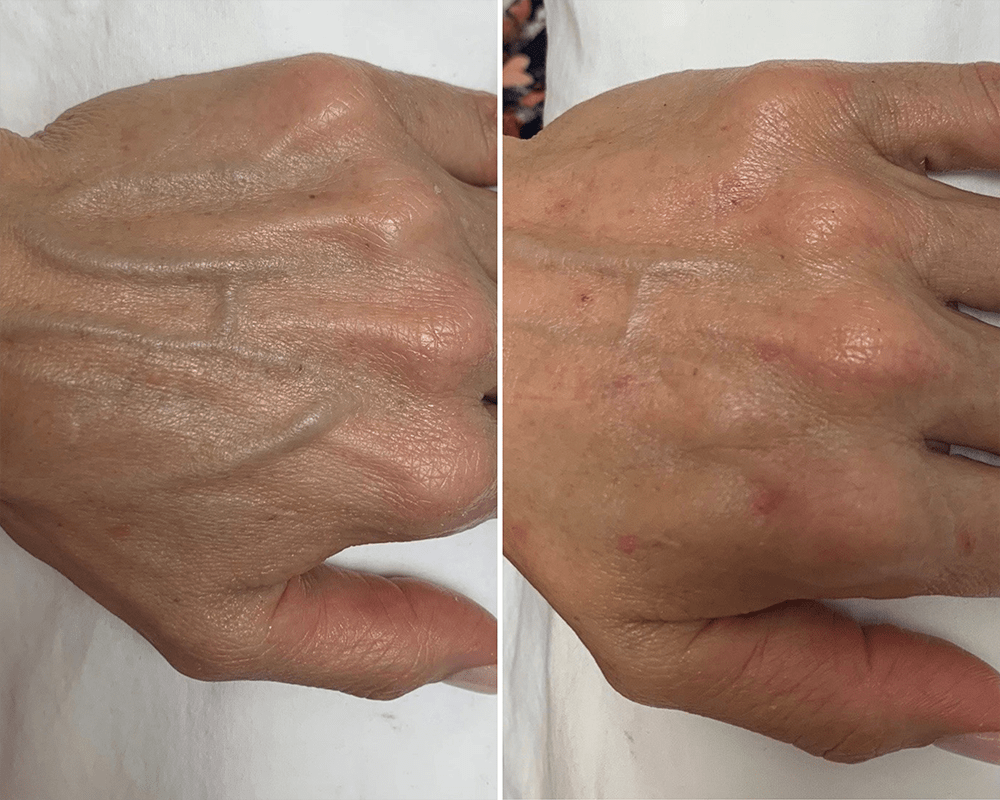
Red light between 630 and 660 nanometers goes deeper, reaching the dermis where fibroblasts live. These cells respond by ramping up type I procollagen production. At the same time, the light dials down matrix metalloproteinase-1, an enzyme that chews up existing collagen. Peer-reviewed journals have documented what this means for skin: fewer fine lines, shallower wrinkles, better elasticity. The changes build slowly over about three months as fresh collagen develops.
Near-infrared light at 830 to 890 nanometers penetrates deepest. It pulls nitric oxide out of hemoglobin and mitochondrial complexes, opening up blood vessels. More blood means more nutrients and oxygen reaching damaged tissue. Research shows this speeds wound healing by encouraging new blood vessel formation and triggering growth factors. The extra circulation also knocks down inflammation while tissue repairs itself.
Green light around 520 nanometers looks promising for tackling dark spots. Early research suggests it can fade melasma and other pigmentation problems while supporting healthy blood vessels. Patients who stick with green light treatments and use good sun protection often notice their skin looks brighter.
One controlled trial put single-wavelength red light up against systems using multiple wavelengths. Both worked well, boosting collagen and making patients happy with results. Surprisingly, the multi-wavelength systems didn’t do better. The takeaway: when you dial in the right single wavelength for someone’s skin, it can work just as well as fancy combination treatments.
But other studies tell a different story. Researchers tested red light at 633 nanometers paired with near-infrared at 830 nanometers for aging skin. Nine treatments later, half the participants saw their photoaging scores improve by 25% to 50%. Even better, 81% said their crow’s feet looked noticeably better at the three-month mark.
What matters most isn’t just mixing wavelengths. It’s the details: how much energy (fluence), how long you apply it (irradiance duration), whether it pulses or stays steady. Professional equipment lets practitioners tweak all these variables based on what they see in your skin.
LED therapy does more than smooth wrinkles. Dermatologists use blue light to treat acne in patients who can’t handle oral antibiotics or harsh topical creams. The antibacterial effects work without the irritation or systemic problems prescription medications can cause.
Wound healing is another area where LED light proves useful. Red and blue wavelengths both help tissue repair in wounds that aren’t getting enough oxygen. They boost blood vessel growth in the deeper skin layers and muscles, which cuts down on dead tissue and speeds recovery. This makes LED valuable after surgery or for treating skin that’s struggling to heal.
Some doctors now build LED into their post-procedure routine. After ablative lasers, chemical peels or microneedling, LED can dial down inflammation and get healing moving faster. Since LED doesn’t create heat, it works well on sensitive, freshly treated skin.
Researchers are also testing LED on chronic inflammatory conditions like psoriasis, rosacea and dermatitis. Results vary depending on the condition and the person, but the anti-inflammatory effects give doctors another option for managing these stubborn problems.
| Feature | Professional Systems | At-Home Devices |
| Power Output | High energy density (up to 126 J/cm²) | Low power for safety (<5 J/cm²) |
| Wavelength Precision | Narrow, calibrated spectra | Broader, variable output |
| Treatment Area | Large, consistent coverage | Small, limited zones |
| Customization | Fully adjustable parameters | Fixed settings |
| Results Timeline | 3-4 sessions for visible changes | Months of daily use needed |
| Professional Guidance | Individualized protocols | No supervision |
Professional LED systems aren’t just more powerful than home devices. Medical-grade equipment hits exact wavelengths consistently across the entire treatment area. Early consumer LED devices scattered their light all over the spectrum, which limited what they could actually do. Modern professional systems zero in on narrow wavelengths that match what cells respond to best.
Getting the settings right takes expertise. Studies show effective doses range wildly, from 0.1 joules per square centimeter for some pulsed treatments all the way up to 126 joules per square centimeter for continuous red light. Practitioners adjust exposure time, how often you come in, and how many total sessions you need based on how your skin responds.
Home LED masks and handheld gadgets run at lower power to keep things safe when no one’s supervising. You might see subtle changes with daily use, but real therapeutic benefits usually need the stronger energy from professional treatments. A few sessions at the office typically beat months of using home devices.
Training matters too. Combining LED with other aesthetic treatments means understanding skin biology, when tissue heals, and how different treatments interact. A professional assessment figures out which wavelengths and settings will actually work for your specific concerns.
Sanctuary Medical Aesthetic Center keeps one of the most complete light and laser collections in the Southeast. Our board-certified dermatologists and plastic surgeons, working under Dr. Jason Pozner’s leadership, match deep knowledge of how light affects skin with equipment that can deliver real results.
We start your light-based skin rejuvenation with a detailed consultation. After examining your skin and talking through what bothers you most, we recommend specific treatments. Our facility stocks multiple wavelength options and energy-based technologies that work well together.
If you’re struggling with acne and inflammation, we build protocols targeting both active breakouts and the marks they leave behind. That might mean LED wavelengths alongside HydraFacial treatments and skincare products chosen for your skin type.
Ready to see what light therapy can do for your skin? Call our Boca Raton or Fort Lauderdale office at (561) 247-2958 or book online. We’ll map out a treatment plan that makes sense for your concerns and your schedule.
It depends what you’re treating. Acne usually needs eight to 12 sessions spread over four to six weeks. Anti-aging treatments might show early improvements after three or four visits, but the collagen-building process takes about 12 weeks to really show up. Your provider will watch how your skin responds and adjust the schedule accordingly.
No pain, no recovery time. LED doesn’t heat your skin, so most people just feel mild warmth during treatment. You can go straight back to whatever you were doing. Some people get a little redness that fades within a few hours.
Yes. Many doctors use LED after procedures like chemical peels, microneedling or laser treatments because it calms inflammation and speeds healing. Your provider can tell you which combinations make sense for what you’re trying to fix.
Professional systems pack more power and hit exact wavelengths consistently across your entire face or body. That means bigger changes in fewer sessions. Home devices stay at lower power levels for safety, so you’d need to use them daily for months to see subtle improvements.